
Academics
The Curriculum
The curriculum at Holy Family Academy is rooted in the classical tradition of Catholic liberal education. On the two wings of faith and reason, students seek the true, the good, and the beautiful.
The HFA Curriculum helps students to form intellectual habits, the “tools of learning,” and to cultivate a world view that is intelligently Catholic. The course of studies is firmly rooted in the trivium: grammar, dialectic, and rhetoric. Subjects include: Latin, Literature, Composition, Science, Mathematics, History, Philosophy, and Theology. All students also participate in Drama (two productions) and Choir (six concerts).
The curriculum is designed to help students learn the truth about God, the world, and themselves.
-
Grade 7: Salvation History I
Grade 8: Salvation History II
Grade 9: Creed and Sacraments
Grade 10: Moral Theology
Grade 11/Grade 12: Christian Anthropology
-
Grade 7: Latin A
Grade 8: Latin B
Grade 9: Latin I
Grade 10: Latin II
Grade 11: Latin III
-
Grade 7: World History
Grade 8: American History
Grade 9: Ancient History
Grade 10: Medieval History
Grade 11: Modern European History
Grade 12: American Civilization
-
Grade 7: Good Books I
Grade 8: Good Books II
Grade 9: Great Books I: The Hero
Grade 10: Great Books II: Tragedy & Comedy
Grade 11: Great Book III: Happiness
Grade 12: Great Books IV: Human Nature & American Literature
-
Grade 7: Composition A
Grade 8: Composition B
Grade 9: Composition I
Grade 10: Composition II
Grade 11: Junior Thesis (and presentation)
Grade 12: Senior Thesis (and presentation)
-
Grade 7: Pre-Algebra
Grade 8: Algebra I
Grade 9: Geometry
Grade 10: Algebra II
Grade 11: Pre-Calculus
Grade 12: Calculus (or other elective)
-
Grade 7-8: Earth and Life Science /Physical Science
Grade 9: Biology with Lab
Grade 10: Chemistry with Lab
Grade 11: Scientific Research (with project submission to the NH Science Expo)
Grade 12: Anatomy & Physiology or Physics
-
Grade 11 & 12 stage a drama production each spring.
-
All students participate in a school-wide choir. The Holy Family Academy Choir has a yearly Advent concert, performs at many major school events, and at occasional feast day Masses.
-
Grade 11: Rhetoric (Public Speaking)
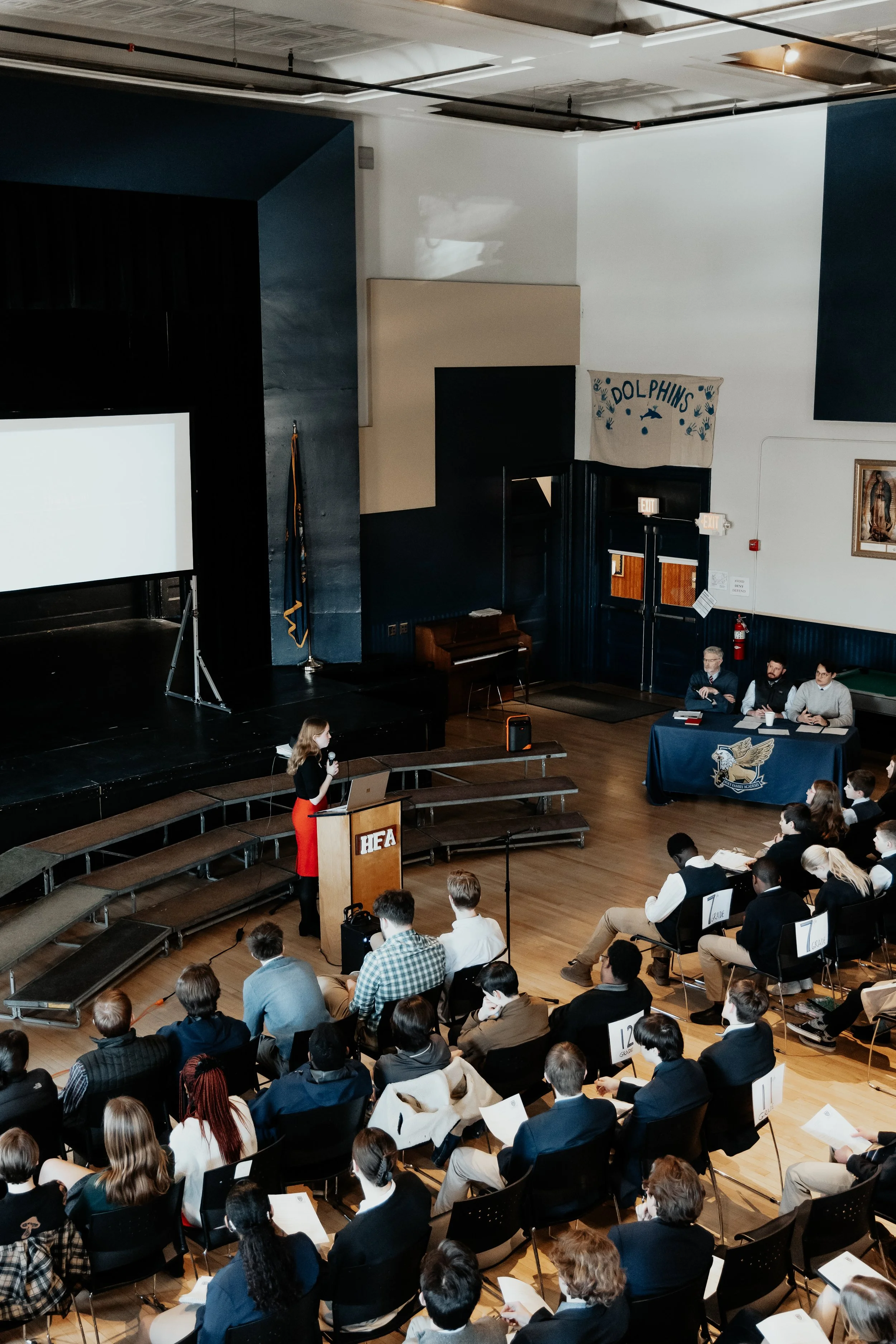
Each junior and senior student prepares a thesis and presents to the entire student body for assessment.
THESIS PRESENTATION

CLASSICAL LEARNING TEST
The Classical Learning Test (CLT) is given to each year to students to gauge their comprehension and skill in regards to classical education.

Students can opt to dual enroll with SNHU on select courses, earning college credit during their high school years.
DUAL ENROLLMENT

NEXT STEPS
Juniors and seniors receive guidance to help them chart their course beyond Holy Family Academy.
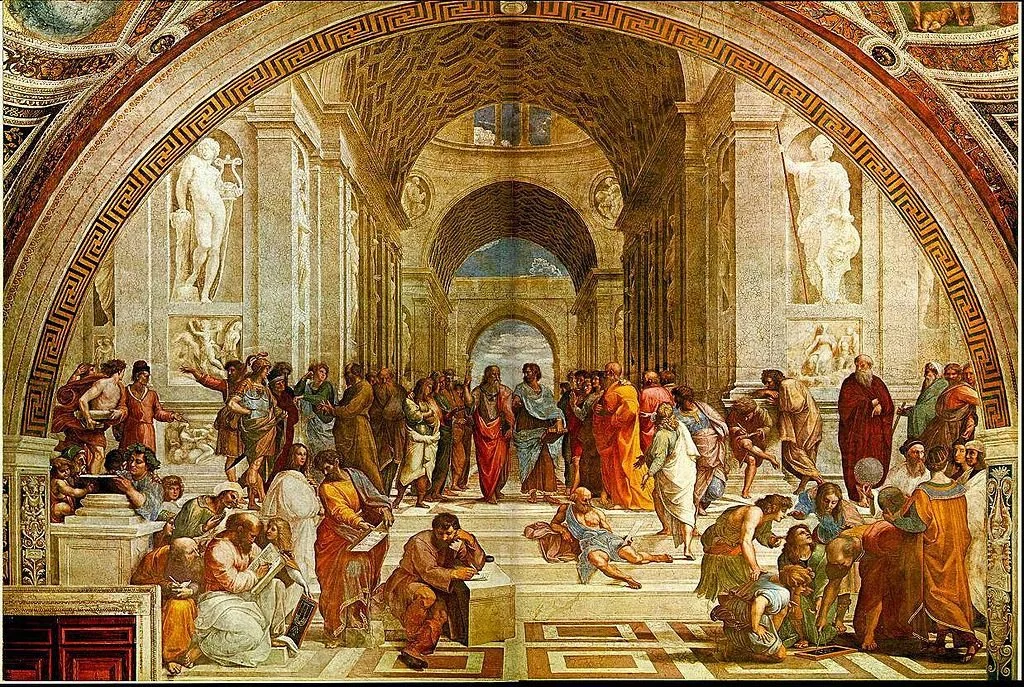
The word curriculum derives from the Latin word for a racecourse, for example, the Circus Maximus; thus, a curriculum presents the planned course of studies each student sets out to complete.
HFA offers a classical liberal arts curriculum consisting primarily of original texts that speak across the ages. The books are chosen for their great wisdom about human nature, the nature of the world, and the meaning of life. Occasionally, the original classics in the HFA curriculum are supplemented by excellent textbooks that are useful for reference, because they treat a subject matter in a systemized and linear manner.
The books in a classical curriculum are distinguished not for their antiquity, length, or complexity; rather, they are classical because their content is among the best that has ever been thought, said, or written. Such books contain much more than facts, information, or data. In an age with a superabundance of data, T. S. Eliot rightly asks, “Where is the wisdom we have lost in knowledge? Where is the knowledge we have lost in information?”
John Adams noted the hierarchy in subject matter when articulating his hopes for what his children and grand-children would study:
I must study politics and war that my sons may have liberty to study mathematics and philosophy. My sons ought to study mathematics and philosophy, geography, natural history, naval architecture, navigation, commerce, and agriculture, in order to give their children a right to study painting, poetry, music, architecture, statuary, tapestry, and porcelain. (John Adams in a Letter to Abigail Adams, May 12, 1780)
As Adams points out, students who have the opportunity to take a classical curriculum benefit not only from the great philosophers, mathematicians, scientists, and artists they study, but also from the generosity of those who sacrificed for the sake of their education.